

How to Shingle a Roof (part 2): Flashing, Hip Shingles, Ridge Vents
August 3, 2012 | by Ethan (email) |
 Today’s Pro-Follow is sponsored by DUO-FAST, a leading brand of high-productivity tools including air-powered nailers and staplers, manual staplers and tackers, and fasteners.
Welcome back to the second half of this Pro-Follow series (see part 1 here). I’ve been shadowing Victor and his crew from EC Roofing as they lay architectural shingles on the in-law addition and the rest of the house. It’s been very interesting to learn some of the tricks for laying shingle, and today’s post will focus on important element like installing hip shingles, ridge vents and flashing.
Hip Shingles
The guys from EC Roofing used hip and ridge shingles which come bundled like typical shingles, but they break into three pieces.
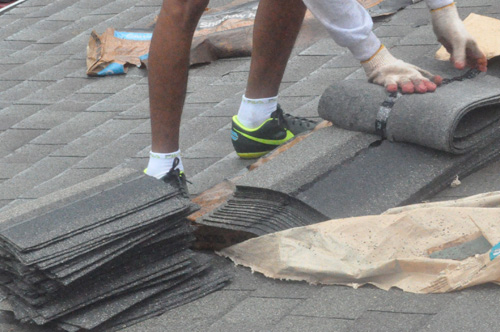
Each shingle overlapped the previous one, and they were secured with two nails on either side.
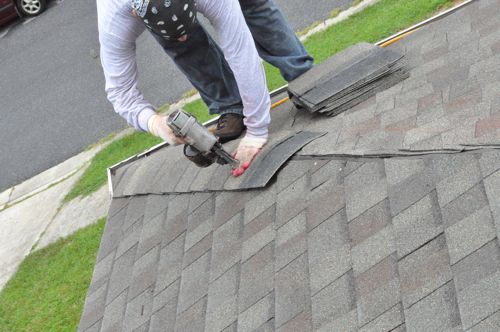
The very first hip shingle was cut to match the corner.
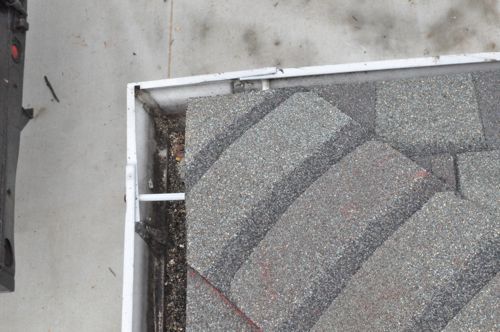
They snapped chalk lines to ensure all the hip shingles were straight.
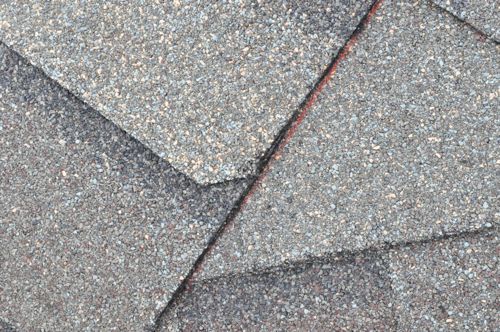
The hip shingles continued all the way to the ridge, and that last shingle was cut to length so as to avoid covering the open ridge rafter.
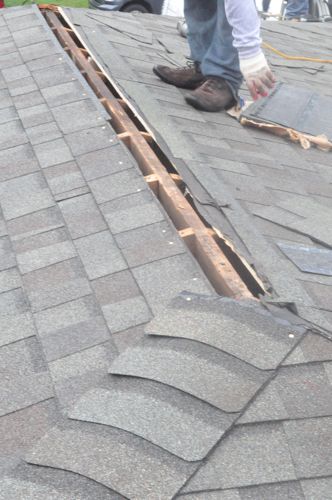
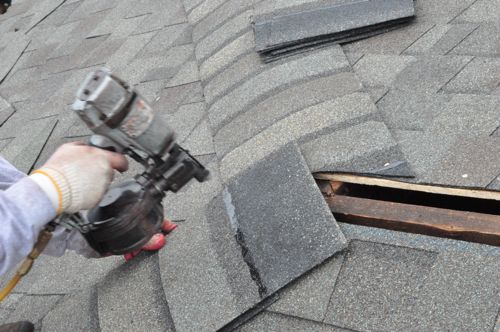
After both hips were finished, the guys would place a shingle parallel with the ridge.
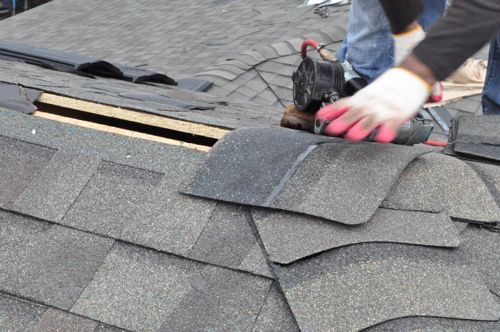
The guys would cut a second shingle to overlap the back half of the first one.
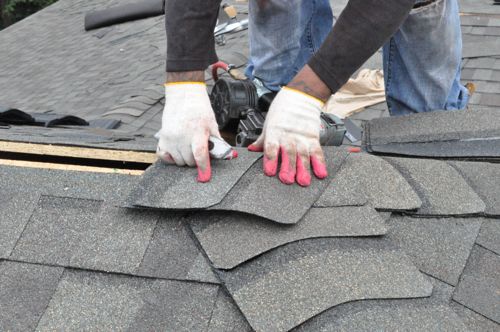
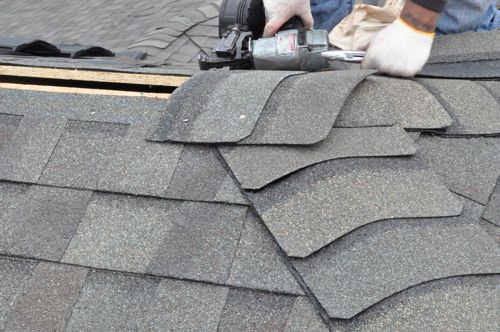
To make the shingle flush, they would cut a short slice parallel with the ridge.
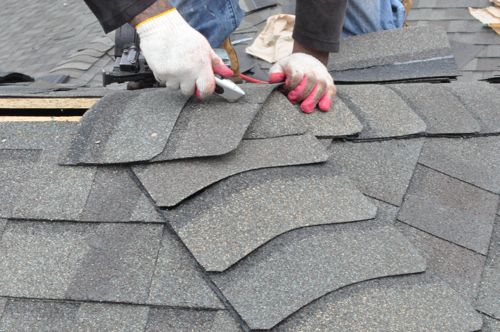
Bending and overlapping these flaps, the guys would put two more nails to anchor it in place.
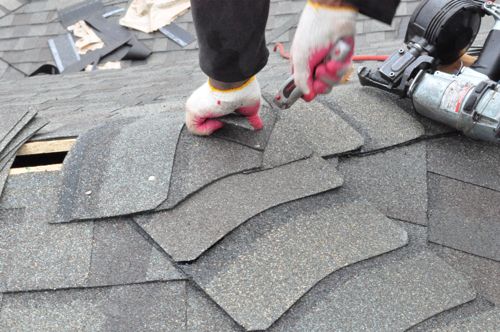
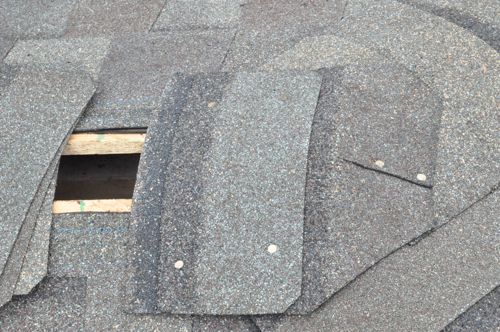
That’s how the guys terminated each line of hip shingles.
Ridge Vents
Next the crew would install the ridge vents, and they would start by trimming any overlapping shingles and cutting back tar paper to expose the ridge.
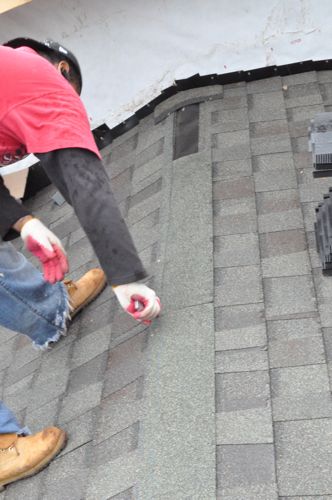
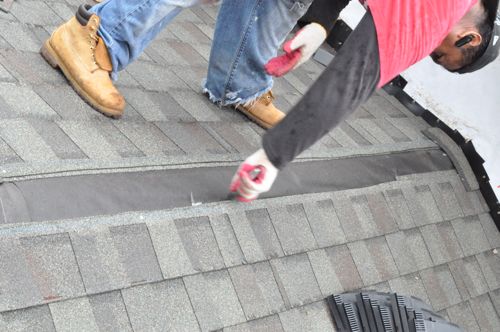
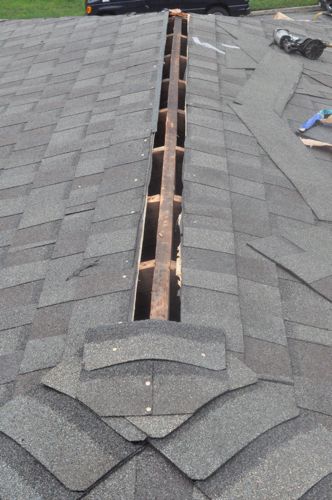
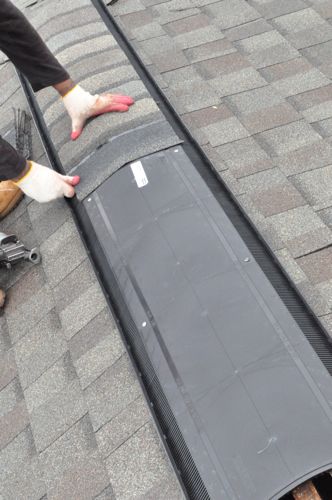
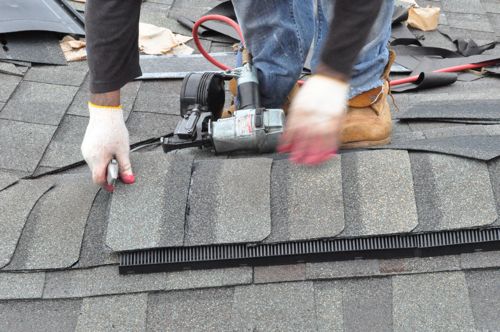
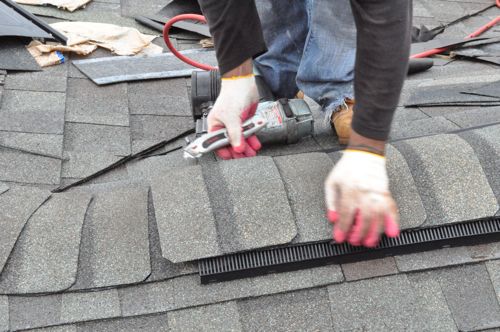
Next, the guys would position the ridge vent.
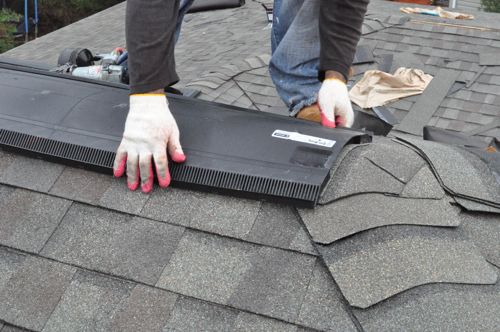
Adjacent pieces of ridge vent “connected” by inserting these tabs into the next segment. Excess length was cut with a utility knife.
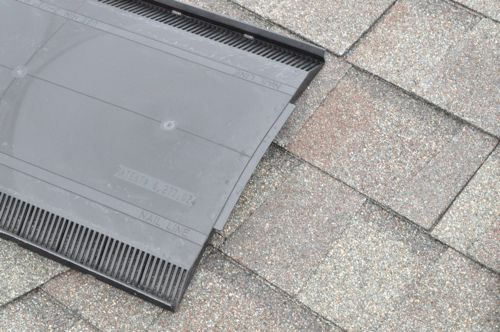
The ridge vents were hand-nailed with 2″ nails to reach into the decking below. Also, the guys were careful to place the nails in the nail line indicated on the vent.
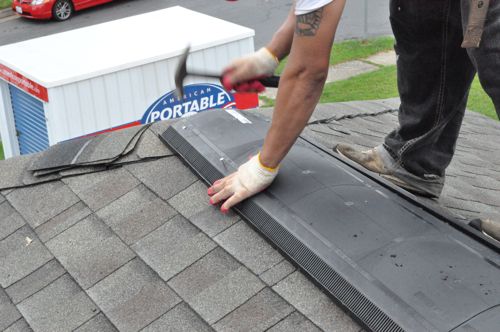
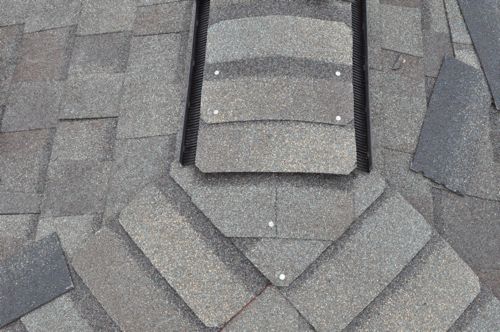
Starting at one end, the guys nailed shingles over the vent.
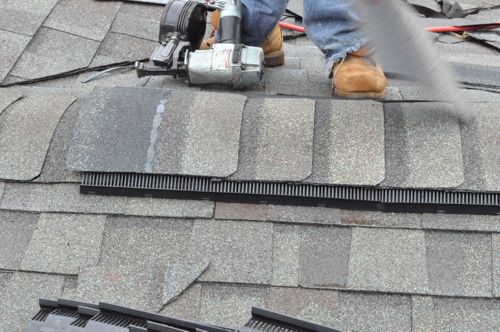
On the very last piece, they cut a shingle to look like a mirror image and nailed it in place.
Flashing
Step Flashing
These pieces of step flashing waterproof the corners where the roof meets a wall, and they’re sized to about half the width of a shingle.
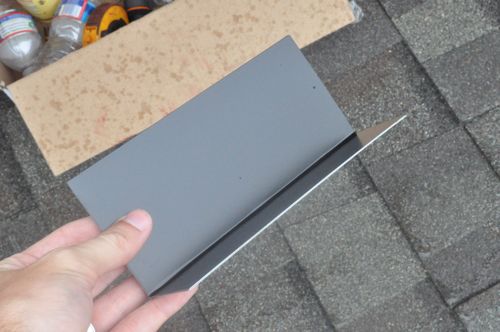
After laying the starter course, the guys would position a piece of flashing so that the bottom edge would be just shy of the next shingle.
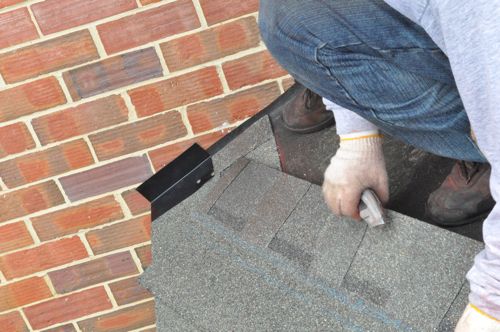
They continued the step flashing all the way along the wall, placing one nail in both upper corners (when there wasn’t brick).
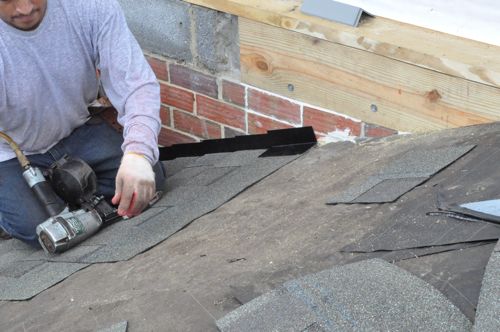
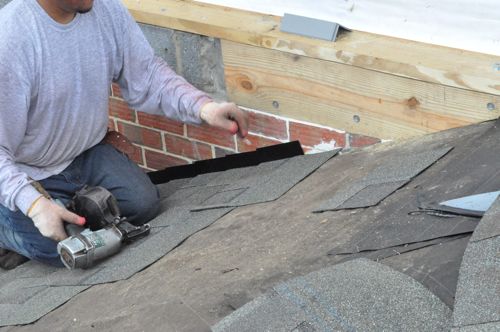
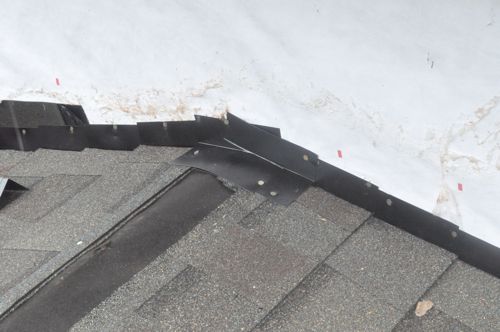
At the ridge, the guys cut slits on two piece of flashing and did an over-under overlap so that the flashing could bend around the ridge.
Chimney Flashing
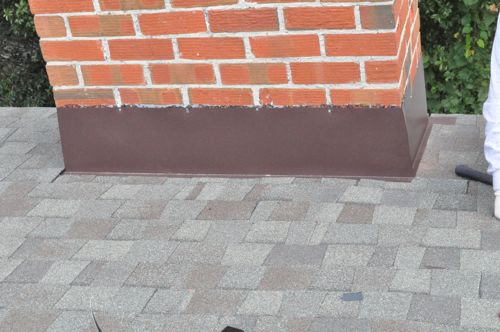
The EC Roofing van actually had a brake installed on top for making flashing, and they cut / bent four pieces for flashing around the chimney.
Pro-Talk: A sheet metal break, sometimes called a siding brake or an aluminum brake, is used for cutting and bending flashing.
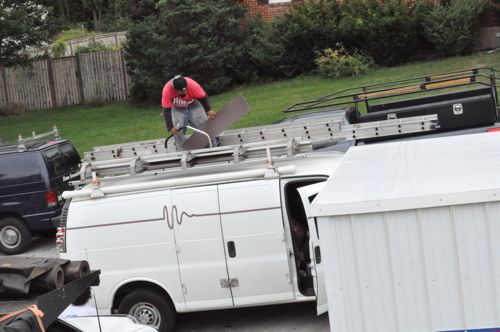
Before the guys started installing the sheet metal, they put step flashing all around the chimney.
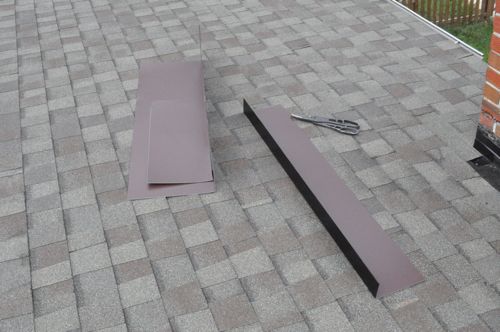
Starting on the lowest side (the side most downhill), they trimmed the flashing to the desired length.
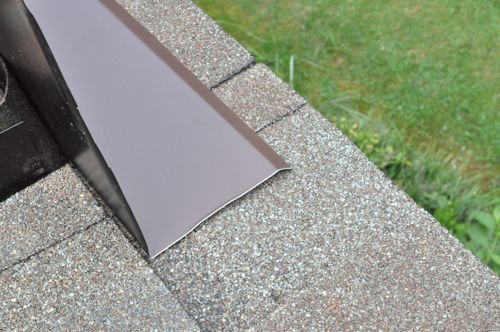
They made angle cuts that’ll allow them to wrap the flashing around the corner. To secure the flashing, the guys drove masonry anchors into the mortar joints.
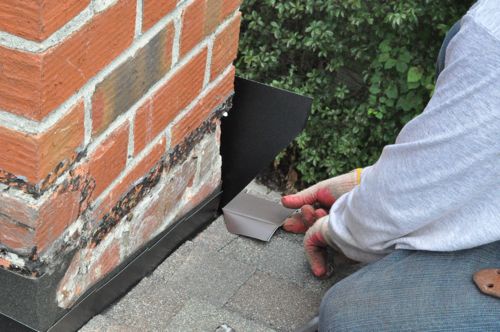
Next, the guys moved onto the sides. They cut both edges flush with the chimney and also cut steps to match the brick.
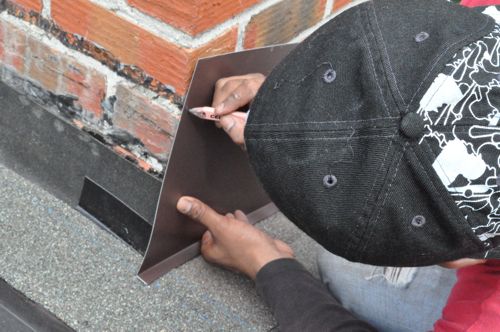
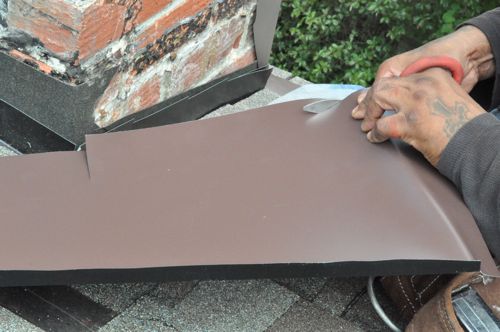
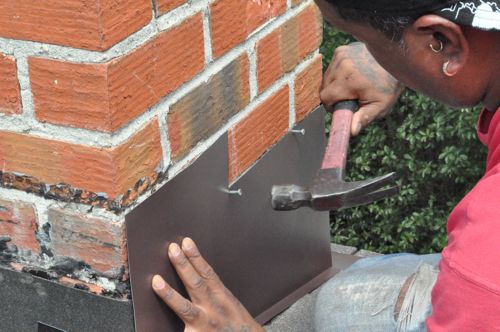
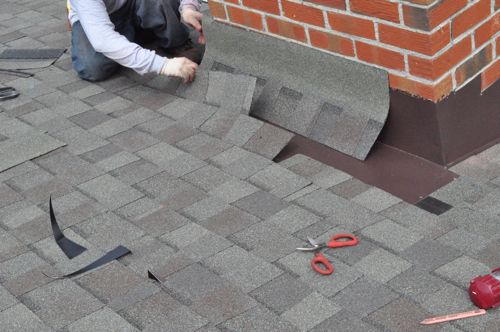
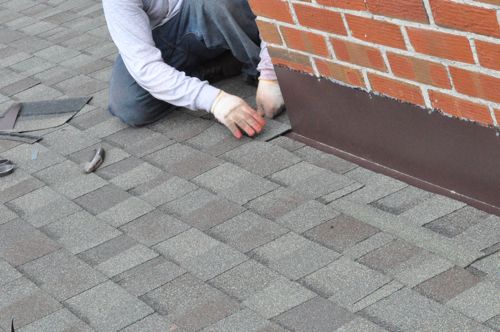
Lastly, they guys installed flashing on the highest side, and you can see that this piece is much bigger than the rest. The increased length is because it needs to be slid underneath a few courses of shingle.
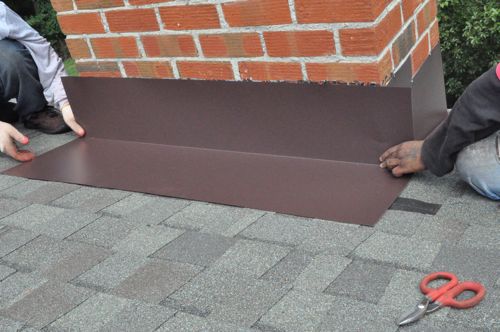
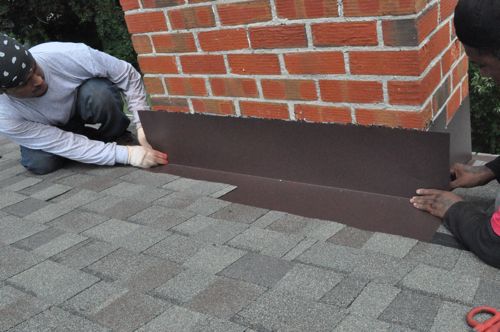
Again, everything is secured with masonry nails along the edge of the flashing.
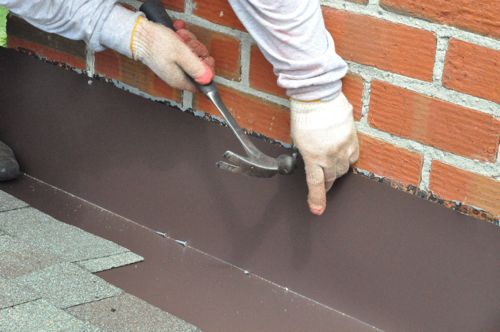
The corners were cut (much like the first piece) and wrapped around the edges.
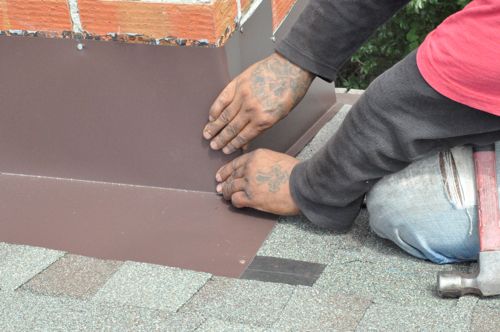
With the flashing in place, the guys nailed the few courses of shingle.
Self-Adhering Membrane
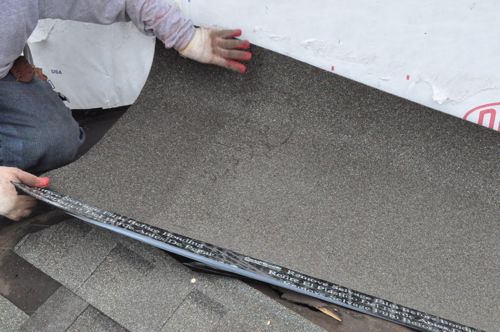
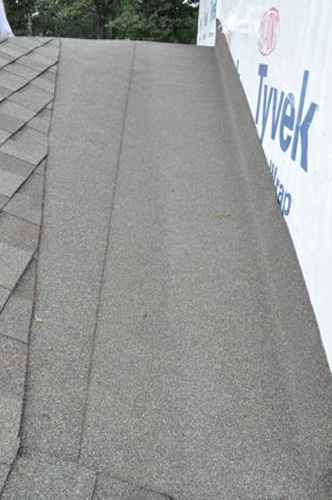
This self-adhering membrane is a SBS modified bitumen roll, and it looks like one continuous, flexible shingle. These rolls can be used as an entire roofing system for low-slope applications, and the EC Roofing crew is using it in lieu of shingles on a roof cricket. This cricket would be very difficult to shingle because the wall of the addition comes in at an odd angle only a short distance away. Furthermore, this section of the roof isn’t visible from the ground so it won’t be noticeable.
Pro-Talk: A cricket is a ridge structure designed to divert water on a roof. Generally found on the high side of a chimney or the transition from one roof area to another.
The membrane unrolls and sticks to the roof, and the guys place a few nails into the wall right along the edge.
Roof Sealant
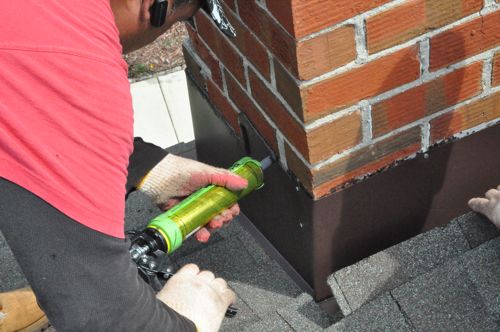
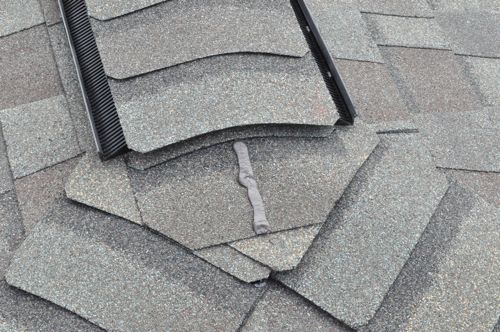
The last thing the guys from EC Roofing did was go around the roof and seal edges (like around the chimney) and any visible nails.
Next week I’ll be on vacation. Look for the complete Project Guide on shingling a roof soon after!










Interesting post! Did they do the entire roof, or just the new part of the house?
They did the entire roof- addition and existing house.
I disagree with some of the chimney details. I think they should have done a metal cricket on the uphill side and all of the counter flashing should have been tucked into the mortar joints. The way it is now debris can accumulate on the uphill side of the chimney and trap water much like an ice dam. Also they are relying on the caulking alone to keep rain from getting behind the counter flash from above.
All good points Jeff, and I’ll work those into the finished Project Guide. As a counterpoint, the chimney was flashed in a similar fashion before, and the homeowners didn’t have any problems (not to say a Cricket isn’t a good idea).
Wouldn’t it have been a better seal to apply caulking to the chimney just before the flashing was installed? Then a single bead around the top would provide backup that prevented water from getting behind the flashing.
I was also surprised they didn’t try to embed the counter-flashing into the mortar. I thought that was a standard practice. Now I’m going to have to climb up on my roof and see how the guys I hired did it. I enjoyed reading about the hip shingles, though. I had no idea how to do that.
Haha. Let me know what you find on your roof. Like I mentioned to Jeff, that’s how it was flashed before. Even so, I’ll point this out in the finished Project Guide.
“Lastly, they guys installed flashing on the highest side, and you can see that this piece is much bigger than the rest. The increased length is because it needs to be slid underneath a few courses of shingle.”
I assume they didn’t nail those shingles in until after the slid the flashing underneath? as opposed to having shingles sandwich the flashing.
That’s exactly right. They left about 4 shingles un-nailed so that they could fit the flashing underneath.
Very helpful post. I know basically nothing about roofing so I’ve been learning a ton. Thanks!
How do you secure a rolled roof?
Thanks