

I recently spent a whole day at our rental property (with the boys in tow, lucky me) for the installation of a new front door and storm door. While the boys watched cartoons on my laptop, I was left with little else to do but read a book and look around to make a mental checklist of future projects that would need to be done.
Up till this point, Fred and I have installed one or two new items in the rental each year, a strategy we use to keep our renters leasing year after year (see our article on retaining renters for more). It’s worked; they’re in their fifth year now. But as I sat there that day, it became clear that we probably should scale back on the annual upgrades and save our money for their eventual departure.  I realized just how many things are going to need to be fixed or replaced at whatever point these two move out.
And by two, I really mean seven free-roaming beings… Or two dozen residents, if you want to count all their aquatic creatures individually. At last check, they had 5 or 6 aquariums of various sizes, two cats and three dogs, all in a little two-bedroom townhome.  I feel like “pet friendly” doesn’t quite encompass what our rental has become.
I give the detail above because not every rental property has this many critters, so not every rental will have all the damage ours does at quite the rate ours has. But still, if you decide to open up your rental to pets, be prepared for some of the following replacement and repair costs:
Pet Damage in a Rental Property (w/ Pictures)
 1. WINDOW TREATMENTS - Our rental is graced with two little jack russels who believe they are entitled to a window seat on each level of the house. Pictured is the peep hole they chewed for themselves at the bottom of the former front door. (The new one doesn’t have a full window, so I can only imagine how their tiny furry heads are spinning now - hahaha!!! Ahem.) There are similar holes in the master bedroom window blinds. Not pictured (because they’re not there anymore) are the vertical blind slats they snapped off in their games by the back door.
The addition this year of the newest dog (I think it’s a German Pointer puppy) has only served to add a third little face that “needs” a view of the outside. We’re very glad we went with inexpensive vinyl blinds and not anything we care about.
 2. CARPET – At least one of the dogs and one of the cats are male. ‘Nuf said.
We were actually considering replacing the carpet in the living room area, since I’m pretty sure it’s original to the house. It was there when I moved in in 2002, and the prior owner hadn’t ever replaced it. She had, however, replaced the whole upstairs, and I went on to carpet the basement during my year living there. BUT… as it turns out, all the “newer” carpet looks almost as bad as this room. And not for lack of trying. Our renters are actually very clean people, themselves, and they spot-treat and run their rug-shampooer around regularly. It’s just hard to keep up with 5 pets. And so we decided we’re not going to spend the money here. As much as we’d love to give our renters newer carpet in this room, we know we’d just be replacing it again – along with the rest in the house – when they move out. So we’ll just save ourselves that $770 (Home Depot quote) expense, now.
 3. MOLDING- This is newer damage, so I’m blaming the aforementioned puppy. Apparently he/she is cutting teeth on the frame to the downstairs doorway.
‘Course in fairness, it could be the cats, scratching out their anxiety about said puppy.
At any rate, this is going to have to be replaced. Not expensive if we do it ourselves, but something to consider on the “cost” list.
 4.  SCREENS – Required for children (especially if you’re applying to adopt or foster them – we know.) A total loss with pets.
Why wait for your owner to let you out, when you can just charge right through the slider?
Come to think of it, we had a (human) houseguest who attempted something similar at our house, and so we no longer even HAVE a sliding screen door here. So perhaps I shouldn’t be so hard on the animals.
 5. LANDSCAPING – Moving on THROUGH the screen door (sorry), I got a good look at the back yard that used to be my tiny pride and joy. Hostas, roses, poppies, and other flora used to line the back of the patio and fill the back corners of the yard. Clearly, those guys weren’t “the fittest” – none appear to have survived. Heck, neither has the grass that I also used to have, I promise.
So re-sodding and minor gardening round out the list. For this particular day’s inventory, anyway.
Allowing Pets is Still Worth It to Us
Now don’t get me wrong, we love our renters. They’ve paid on time for more than 4-1/2 years, usually driving their rent check over to our door. They clean the place. They’ve added a few upgrades (ceiling fan, chandelier, shelving) themselves, and they’re also just enjoyable to know. So, we don’t really resent the pets they bring with them.
And we had already planned to repaint the whole place in between residents, so the animal scuff marks on the walls don’t really add work there.
But in case anyone else out there was wondering why so many landlords opt for the Pet Free Rental, now you know the reason! I feel blessed “only” to have two little boys here at our house. Pets cost a good bit in rental repairs. So if you do allow your renters to have pets, just figure that into the budget.
What do you think? Do you have experience with pet renting from the renter or landlord side?

Keep Tenants Renting Year After Year: 10 Tips for Retaining Your Renters
October 1, 2008 | by Fred (email) |
 Finding tenants can be an exhausting process for independent landlords, especially in today’s challenging real estate market. One friend of ours has shown his suburban townhome to more than a dozen prospective tenants, all of whom have shown little interest. Competition is fierce in this market, and as every good salesperson knows, it’s far easier and less expensive to keep an existing customer than find a new one.  The same is true in the rental business, but unfortunately, some landlords fail to take care of their tenants, even when the cost and effort required is negligable!
Consider this example: If your rental property sits vacant for 2 months (not unusual in today’s market), you sacrifice 2 months of rent and you have to put the time and money into finding a new tenant. For a $1000 / month property, this could easily amount to $2500 of lost revenue and 50 hours of your time. Even if you value your time at only $10/hour, that’s a whopping $3000 in losses. Now, what if you had put only 30%, or even 10% of that back into your rental property and existing tenants. Could you have enticed your tenants to stay? While no action on your part will ensure your renters will re-sign for another year, taking some proactive steps can greatly increase your odds. Here’s our ideas below. Feel free to weigh in with your own.
10 Tips to Get Your Renters to Sign the Next Lease
1. Offer a re-signing bonus for a lease extension. The simplest and easiest way to incentivize your renters to stay is to offer them a discount for signing a new 12-month lease. Consider how much money and time it would cost you to find new tenants. Take 50% of that, and give it to your tenants as a retention bonus. If you give them the discount all in the first month, it amounts to hundreds of extra dollars in their pockets immediately! (Note: You should notify your tenants at least 90 days in advance of your intention to offer this discount, to encourage them not to look at other options).
2. Replace an appliance, carpet, or other major item at least once every year. Unless your property is brand new, chances are the appliances are going to need replacing. If the appliances are fine, consider replacing the carpet or another item. While a new refrigerator or stove represents a significant out of pocket cost, these items last for 10-15 years. Amortized over that period, a stove may only cost you $50/year. Plus, they will be attractive to new tenants, and they increase the value of the home.
3. Send your tenants birthday, anniversary, and holiday cards. While we’re a big fan of including some type of gift certificate in these, it’s not necessary. Just don’t send a pre-packaged card with just your signature. Write your tenants a hand-written note inside.
4. Send your tenants on a dinner night out after 6 months of on-time rental payments. Send your tenants a card six months into their lease with a thank you for paying on time each month. Send them out to a dinner for two to a nice restaurant in the area. Be sure to get a gift certificate large enough to cover the entire meal and drinks.
5. Forgive a late rent payment. As I wrote about in this article on late rental payments, you should always forgive at least one late payment from your tentants. Everyone makes a mistake once in a while, and this gesture will pay dividends in goodwill and potential lease renewals.
6. Be responsive to issues. If you’re tenant calls at 9:00pm at night to report a water leak, take action immediately to help resolve the situation. Call a plumber, even if it means paying a little extra to get someone there early in the morning. Don’t put off any issues of water, electricity, heating and air conditioning, safety, or even convenience (e.g., dishwasher fails). Remember, you would want these fixed immediately too.
7. Offer optional conveniences. Consider finding a lawn and garden or snow removal service to take care of the property, and offer this service for a premium to your tenants. Some tenants will prefer everything be taken care of for them, others would rather save the $ and do it themselves.
8. Plant gardens twice per year. Everyone likes getting flowers. Once or twice per year (Spring / late Summer), plant flowers out front of your rental property. It will certainly brighten your tenant’s day, and remind them how great it is to rent from you.
9. Pass along community benefits. If your HOA provides a pool or tennis court membership, ensure your tenants receive the pool/court passes for their own use. Many communities offer a variety of services like this. Ensure your tenants know about them and can take advantage of them.
10. Offer to pay for the materials if your tenants upgrade the property. Some tenants would love to improve your property (by say, adding chair rail to a room, planting gardens, etc.) Offer to reimburse them for the materials if they provide the labor. Just ensure that you agree with their proposed improvements ahead of time.
What do you think? What ideas do you use to retain tenants? Are you a tenant? What is your landlord doing for you?
Photo by Kivanc.

If you did your homework before accepting a tenant, chances are late rent payments will be few and far between for you. If you rent long enough, though, some renter will eventually be late on a payment. Even the best tenants aren’t perfect all the time.  This article is a compilation of a few thoughts on late rent payments, what fees you should charge, and how to make the most of late fees when they’re appropriate.
If you decide not to read all the points, there’s only one key take away to get from the article: renting a property for the long term is about a relationship between the landlord and tenant. Jumping on opportunities to charge your tenants late fees might not be the best strategy. Sometimes, a grace period beyond the “standard grace period” written into most contracts is a good strategy to show your tenants you appreciate their otherwise steady payment history. So, here’s the thoughts, in no particular order. Feel free to weigh in with your own!
Don’t Jump at the Opportunity to Charge a Late Rent Fee
All of us have forgetten to pay a bill. Every adult I know has forgotten to make a payment on something, sometime. It might be utilities, credit cards, a mortgage, cable, telephone, a friend, etc. Until recently, people had to write checks for each bill. Nowadays, we have online bill pay, automatic drafting from checking accounts, credit card payments, etc. All of these mechanisms are there to help us pay the myriad of bills we face. Why? Because it’s easy to miss a payment, even for the most responsible among us.
If your tenant has been renting from you for some time with no late payments (we think 6 months with no late payments is a good rule of thumb), you should cut them a break for being late. The day after their payment is late, give them a call on the phone and remind them (gently). Tell them you’re happy to waive the late fee if they bring the payment over in the next 2 days. People like to know that they’re doing business with reasonable people. Its reasonable for someone to make an error every once in a while and need a reminder, even though they are otherwise very responsible. Good tenants will recognize the gesture, and they’re more likely not to hound you every 6 hours if their air conditioning goes out 🙂
When to Charge Late Fees
There are times when late fees are appropriate. Late fees should be imposed when tenants are chronically late on payments (more than twice in a 4-6 month period) or when tenants are very late on payments (more than 7 days after the grace period ends). The extra motivation that a fee provides may be just the thing that makes your tenant more responsible.
That said, if you’re in a situation that merits charging tenants late fees, you’ve probably got a bigger problem. People who pay their bills late on a regular basis do so because bigger issues are present in their lives:
- They may not have the money in their budget to make rent payments. Perhaps they stretched to make the first few payments and are now struggling to make ends meet, or there was a change in employment status. If not repaired, this problem will escalate quickly into an eviction situation.
- They may be irresponsible with their money, and possibly in other areas of life as well. For instance, they may be more likely to damage your property, which could cost thousands more than mere late payments.
How to Charge Late Fees
If you decide to impose a late fee on your tenants, you should notify them in writing of the delinquency of their account/payment and the need to charge them a late fee.  The late fee must be consistent with the terms you agreed to in the original lease agreement (see below).
You should send the notice via registered mail and retain a copy of the letter you sent for your own records. If you find yourself in an eviction situation down the road, a paper trail will be essential to ensure you don’t end up on the wrong side of the law.
One last thing on this point: the letter you send should be based only on fact, not opinion. There is no need to accuse the tenant of anything more or less than being late on their rent. If the issue ever goes to court, you want to have clean, appropriate documentation to support your case.
Potential Late Fees Must be Written into the Lease Agreement
You must clearly lay out potential late fees to your tenants in their lease agreement. Your jurisdiction may allow you to charge a late fee or interest even if you don’t have this clause, but it will dramatically simplify your situation if you do.
Make the terms under which a late fee can be charged, and the amount of the late fees very clear in the lease agreement. This lease agreement includes some example language.
Late Fees May Be Limited by State, County, or Local Law
Many jurisdictions have limits on the amount of late fees you can charge. Some districts limit the fees by a percentage of the amount due, others limit it to a flat fee like $50.00 for late payment. For instance, Maryland limits late rental charges to 5% of the amount due.
Jurisidictions will also limit the amount of interest you can charge in addition to any late fees that are levied. In general, these limits are lower than limits imposed on credit cards, so you should check with your county/state Government to determine the actual limits on late fees.
The Bottom Line
Charge late fees only when they make sense for the situation. Write the terms of late fees into the rental agreement, and always communicate adverse information clearly, concisely, and in writing with your tenants. Best of luck to all the independent landlords out there!
What do you think? What’s your late fee strategy? Have you dealt with chronically late renters? What strategy do you use for your own properties?
Photo courtesy of PacDog.
 If you’re an independent Landlord, chances are at some point you’ll be considering a furnished vs. unfurnished lease. Each option has its pros and cons, a few of which are discussed below. The bottom line is that most places will perform better unfurnished because almost all potential renters already have their own furnishings. Most tenants will also want to make their leased property their home by decorating and furnishing it themselves. There are exceptions, and you should do your own market research to determine which is best in your situation.
When Should You Rent a Property Fully Furnished?
- Your Property is a Vacation Home: Without a doubt, the #1 reason to rent your property furnished is that people are only staying for a vacation. Vacation homes that are rented for 6 months or less should always be rented furnished (but you knew that… who goes on vacation to an unfurnished house?)
- Your Target Market is Transient Business People: The most common types of housing for this leasing audience are townhomes and condominiums near business parks or in city centers. Your target audience is people who will stay for short periods–one week to a maximum of a couple of months. These tenants will want the luxury of staying in a place a little nicer than an EconoSuites. If this is your audience, your rental should provide always include a great office, high speed internet, and other business-useful ammenities.
- Your Target Market in College Kids: The mere thought of renting to college kids strikes fear into the hearts of many Landlords. If you’re one to brave this challenge, you’ll want very durable furniture that’s easily cleaned and cheap to replace. Visit a college dorm room on a campus somewhere; most colleges have learned what type of furniture to put in dorms. Copy what they’re installing.
- Your Furnishings Complement the House in a Unique Way: In specialized rentals where the furnishings and the home complement each other (for instance, in certain historic homes), it may be better to rent furnished. In this situation, you should consider how much stuff your tenants are likely to bring with them, and ensure there is plenty of storage or unfurnished rooms to acommodate their stuff.
- There Is a Market Demand for Furnished Housing: This is a more difficult item to assess, but is the ultimate test of whether you should rent home furnished. Is there a high demand for furnished housing in your area? One way to find out is to see if anyone else is advertising a furnished rental. Track how long that rental is on the market – if it rents quickly, your area might be perfect for this kind of rental.
Pros and Cons of Furnished Rentals:
Pros:
- Higher rental price – anywhere from 25-100% depending on market.
- Existing furniture doesn’t need to be moved (as long as its the right furniture for the house).
- Less competition in most markets.
Cons:
- Smaller pool of potential tenants in most markets.
- Shorter rental periods require additional Landlord involvement or incur higher management fees.
- Potential damage to furniture, leads to higher liklihood of Landlord – Renter disputes.
- Higher security deposit required to cover potential furniture damage reduces affordability.
- Higher maintenance costs to deal with furniture cleaning between tenants and furniture lifecycle replacements due to normal wear and tear.
- More complicated move-in and move-out inspections covering furniture condition.
- Higher insurance costs for fully furnished properties (15-50% higher in most cases).
When Should You Rent a Property Unfurnished?
Not surprisingly, the basic answer to this question is: whenever it doesn’t make sense to rent it furnished. In general, it makes sense to rent a property unfurnished most of the time. You should rent unfurnished when:
- Your Target Market Already Has Their Own Stuff: Most tenants will be moving with at least some of their own stuff. Remember, even kids moving out for the first time usually come with their own bedroom furniture. This is the #1 reason to rent a property unfurnished.
- Your Target Market Has a High Probability of Damaging Furnishings: There are certain market segments that are more likely to damage furnishings than others. In general, low income and college rentals should be leased unfurnished, or the rental furnishings should be extremely durable (in the case of a college rental).
- You Don’t Have Time to Deal with the Hassles of a Furnished Rental: There are a number of hassles associated with furnished rentals (see the Cons section above). If the thought of dealing with these makes you uneasy, chances are you shouldn’t rent furnished.
- The Added Cost of Renting Furnished Isn’t Recoverable in Rent: At the end of the day, the question can be one of economics. There are considerable additional costs associated with renting a furnished property. If the market is only willing to pay a 15% premium for a furnished property, it probably doesn’t make sense to rent furnished.
Pros and Cons of Unfurnished Rentals:
Pros:
- Larger potential rental market with longer lease periods.
- Less time required to manage the property.
- (also see Cons in the section above).
Cons:
- Lower rental price.
- More competition from other Landlords.
- (see list of Pros in the section above).
What do you think? Have you had an experience renting a furnished or unfurnished home? Did we miss anything from our list of factors to consider?
Image courtesy of blhphotography.
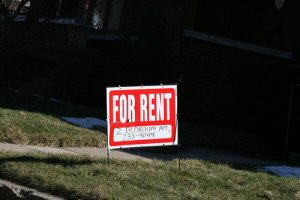 So you’ve finally put the finishing touches on your investment property and you’re ready for the rental applications to start pouring in, preferably from dozens of over-qualified prospective tenants. In the right market, a simple front yard “for rent” sign and an on-market price tag will attract more than enough applicants to give you the pick of the litter.  In moderate and difficult markets, a little extra legwork is required to attract the quality applicants your property deserves (and your investment demands).
If you’re an old timer at this rental thing, you can skip down to the longer list of property promotion tips below. If this is your first time leasing a property, and thus your first time finding tenants, I have two words of advice up front:
- Don’t get discouraged. Independent landlords have been renting properties since property ownership began. It isn’t that hard to do, and you don’t even have to be that smart. You just have to put in the time. The list below will give you some good places to start.
- Never accept a tenant just to get the place rented. Bad tenants can cost you 10 times more than the rent you’ll collect from them.  They will miss payments, damage the property, and could ruin your reputation in the neighborhood.  If you aren’t getting quality candidates, you need to cast a wider net.
Finally, before I move on to the list, recognize that this article isn’t about screening out prospects once they’re interested. This article is about generating that interest in the first place. If you can’t get applicants, you’ll never have to worry with screening techniques.
Where to Advertise
1. Craigslist and other online free listing sites. With free, long-length classifieds with pictures, it only makes sense to publish your listing on Craigslist first. Craigslist has over 9,000,000 visitors a month. That’s pretty good odds that someone stopping by will be interested in what you’re selling.  Unfortunately, all of your competition also knows about Craigslist. Today in the Baltimore area alone, there were 200 new listings. But, there are things you can do to make your property stand out (see how to advertise below). Don’t bother with online “pay” sites. If your Craigslist listing isn’t getting traction, either your price is too high, or you aren’t including the right selling features of your property.
2. The nearest metropolitan paper. This tried and true method of publicizing your property still works. Most large papers will run classifieds for $20-$100 for some run period which usually lasts for at least 2 weeks. Run your ad in the weekend paper. Weekday issues don’t perform as well.  If the paper offers online listings, see if they’ll throw in a listing there for cheap or free. If not, stick with free online services, don’t pay the paper much to use their web site.
3. Local, community, and free papers. If you live in a heavily-populated area, there may be 3-4 local papers in surrounding communities that are good targets for your listing. You should advertise in the paper that serves your area as well as in papers in surrounding towns/counties.  Free papers that are distributed to every home in an area (e.g. PennySaver) are excellent targets for advertising, since people don’t have to make extra effort to pick them up.
4. Military installations & churches. Contact your local military base and ask if they keep a listing of available properties for incoming service personnel and their families (most do). Military personnel present much lower payment and damage risk than the general public. Local churches may have missionaries coming back from overseas, or local parishoners who are looking for a place to live. Many churches have a public bulliten board within them where rental notices may be placed with permission.
5. Large companies & government agencies. Many large companies and Government agencies have public bulliten boards where staff can place ads. You probably have friends working in these companies. Ask them if they’re willing to put a flyer up for you.
6. Grocery stores and other public centers. Grocery stores often have public bulliten board space where you can place your ad. Make sure there’s no fee to place an add before you pin yours up.
7. College campuses. While college kids are often stereotyped as extremely destructive, this isn’t always the case. Many times, kids’ parents are paying for their housing, and they can afford the payments of a nicer place. Most college kids won’t have established credit or income streams, so their parents will co-sign. If you’re concerned about damage to the property, consider raising the security deposit to a level that reduces your risk. Also, make it clear what is and is not acceptable in the home.
How to Advertise
8. Make a Rental Advertising Flyer. The simplest flyer should include every feature of the property that sells well. You should also include call back information, and a map to the community. Do NOT list the address of the property on the flyer. It signals to would-be vandals that the house is vacant. If you use MS Word, Microsoft offers several real estate flyer templates online for free.
9. When ad space is limited, highlight the essentials & best features first. If you only have 80 characters of text, make sure you highlight the most important things first.  Critical information (in order of importance, not listing order) are: call back number, location (city, town), house type (SF, TH, EUTH, APT), is fully furnished? (only if yes), price per month, # bedrooms, # baths (only if good selling point), central AC (only if yes), non-essential appliances (washer, dryer, dishwasher), pets welcome? (only if yes), property characteristics (fenced yard, pool, etc), security deposit requirements, credit check requirements, school districts (only if good).
10. List ONLY the features and benefits that SELL. Remember, you are selling your property, not just describing it. If you’re property lacks central AC and most of your competition has this, don’t describe the great window fans you’ve installed. That only reminds your prospects that your property doesn’t have this coveted feature. You don’t need to tell tenants about the lack of central AC. If it’s important to them, they’ll ask.
11. Use pictures whenever possible. The old adage is true: a picture is worth a thousand words. Just make sure the pictures convey the right 1000 words. Use pictures that make the space seem large and inviting. Look at your competition’s photos online (you can see hundreds on Craigslist); make sure yours are as good or better. Include pictures of the community, including any benefits like tennis courts, pools, etc.
12. Tell prospects that you have credit and income requirements. When you have the space (e.g. on a flyer), it is good to disclose that credit checks and/or income verification are part of your application process. You can add that applicants who don’t meet the requirements may have a co-signer back their agreement.  Remember, prospective tenants who shy away from credit / income checks are not worth renting to. A solid applicant will have no problem with you checking these stats.
How to Engage with Prospective Tenants
13. Be confident in your property and yourself. When a call comes in, set a time to meet potential candidates and ask to confirm with them 30 minutes prior to the showing (offer to call them, or have them call you).  Dress nicely for your meeting, but not too formally. People like to work with real people; a suit would identify you as a salesperson.
Offer to show people around the house. If they prefer to walk around alone, let them. If they ask for a tour, highlight positive features in every room you enter. If a prospective renter highlights a negative feature, don’t disagree with them. Simply continue your tour and point out other benefits of the home. Remember, never act offended if the prospect doesn’t appear to like your property. It might not be what they expected (after all, your flyer only included positive traits). If they decide the property isn’t for them, ask them what the primary drawbacks were so that if they are correctable, you have an opportunity to do so.
14. Finally, be persistent. Renting a property takes time and diligence. If one tactic isn’t working for you, try another. Don’t move immediately to reducing your price (unless you realize you’re way out of market). Don’t take the feedback from one visitor and assume everyone who sees the property will feel the same way. Continue believing in the property and yourself. If you’re confident and persistent, you’ll have tenants in no time
—-
What do you think? Was this article helpful to you? Are there any tips you would add?
Image by BookMama.
 Our community recently voted in a new HOA board of directors and architectural committee. The new committee is taking a more active role in enforcing the community’s covenants than previous committees have, creating some anxiety, disagreement and resentment among homeowners.
Without getting into specifics, some of the community’s covenants have not been enforced for years–one home was in violation for more than 10 years–and homeowners feel rather blindsided by the the committee’s recent hard line stance. Since some of the folks in our community read this blog, I don’t want to get into the actual issues. Instead, I thought I’d write some key thoughts on the essential elements of running a successful HOA architectural committee.
This list is based on years of experience working on non-profit boards and committees, and years of living within the confines of an HOA.
Know the Community’s Rules
An architectural committee is charged with reviewing and approving changes to the exterior of a home and enforcing the rules for unreviewed exterior changes or run-down exteriors that violate the community’s rules. In order to know whether or not to approve a project, or whether a home is in violation of the rules, committee members must know the rules. Each member of the committee should have a thorough understand of what is and is not allowed in the community.
Enforce the Rules Consistently
Since many architectural committees are staffed by unpaid volunteers, it is easy for these groups to slack on their responsibility for covenant enforcement. Worse yet, committee members may only enforce the rules for homes that are within site of their property, ignoring other properties in violation throughout the community. Some committee members might want to give friends special breaks. Consistent application of the rules is paramount. Committee members should be able to clearly rationalize each decision the committee makes, and that decision should map back to a rule or bylaw.
Make Sure Everything Is in Writing
When a committee charges a community member with a violation, it is imperative that the committee notifies the member in writing and clearly describes the violation, refering the guideline or bylaw the member has violated. Â It is not acceptable to remain silent, as that Washington Post article describes.
All official correspondence should be in writing, and minutes should be taken at each meeting to record the activities of the committee. Since most architectural committees rotate members each year, the written record serves to inform new members of previous actions.  Some committees (such as the Vieux Carre Commission) have begun to store this information online for residents to gain easy access. The committee should also encourage alleged violaters to correspond in writing and keep copies of their mailings. This ensures everyone remains on the same page and can be a great help if legal action results.
Always Be Gracious
Many residents in a community will make an honest mistake in not notifying the committee of a change to their property. These people may have lived in the community for 20 years and honestly believed they weren’t doing anything wrong. In some cases, required repairs/changes to a home could cost many thousands of dollars. Some members of the community will likely not be able to pay that up front. The committee should make every attempt to work with a homeowner to make the change to bring a home back into the community’s standards.
While patience is not legally required, it almost always results in a better outcome. The reality is if a homeowner cannot afford to change their property to get it back in conformance with HOA regulations, the committee has few options other than to pay for the changes themselves with community monies, which may never be repaid by the homeowner. While a lien can be put on a property, that lien is subordinate to a first mortgage, and with many houses underwater, there is no guarantee of repayment.
Follow Through on Actions
Being gracious does not eliminate the need for rigorous enforcement. While the committee should make every effort to work with a homeowner, in the end, a homeowner in violation of the covenants must repair / change their property. If a committee does not follow-through on actions, the community association will slowly disintegrate. This could mean pursuing legal action against a community member, such as assessing a lien against their property. Following-through will require resolve and dedication, but it’s important for the future of the community.
Get Legal Counsel
When dealing with homeowners who refuse to repair or change their property after repeated notices, it is wise for the committee to engage professional legal assistance. The law surrounding HOAs and POAs is complicated. An attorney can help navigate these waters and ensure the HOA doesn’t find itself on the wrong side of the law.
What do you think? Did I miss something in this list? Have you found yourself at odds with an HOA?