


We’re back with our next Pro-Follow, and I’m excited because Steve and his crew are starting a master bathroom remodel. Remodeling a bathroom is a great home improvement job, and this Pro-Follow series will walk you through each step.
If you’re not familiar with our Pro-Follows, I spend time with a local contractor, documenting their work. You get to see the progress in regular updates, and with tips and tricks along the way, there’s no better resource for learning how to tackle your next home improvement project. Find all of our completed how-tos in the Project Guides section, and if learning from the professional contractors sounds like something you’d enjoy, become an email or RSS subscriber and never miss out.
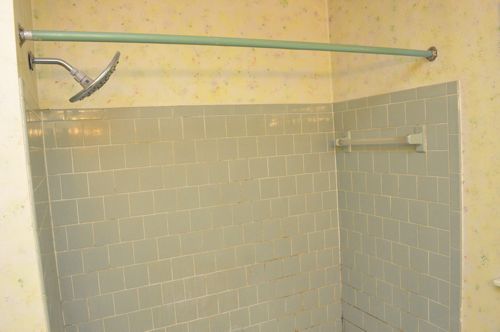
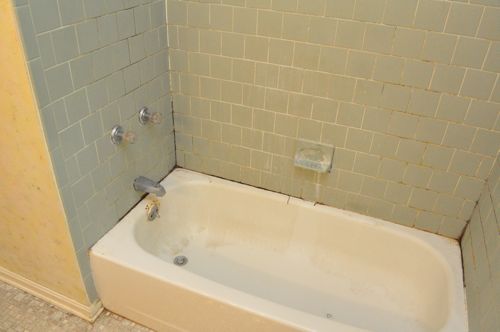
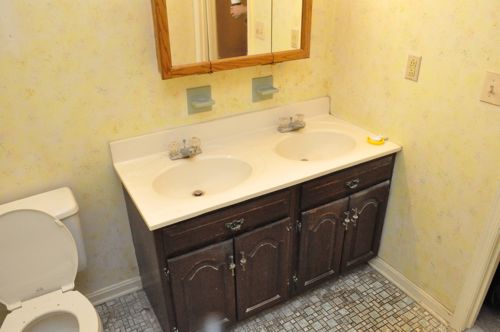
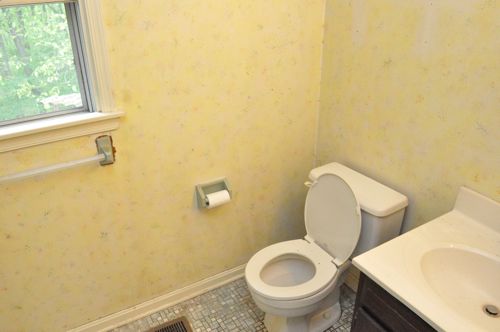
Here’s how the bathroom looked when the guys arrived yesterday morning. The plan is to replace the vanity, toilet, and floor and wall tile. Instead of a tub, the homeowners opted to have Steve and his crew install a shower. They’ll also be moving the bathroom vent closer to the shower.
Step 1: Remove the Vanity
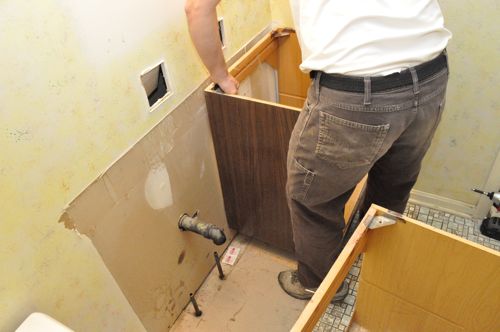
The guys started the demolition process by disassembling the vanity and countertop.
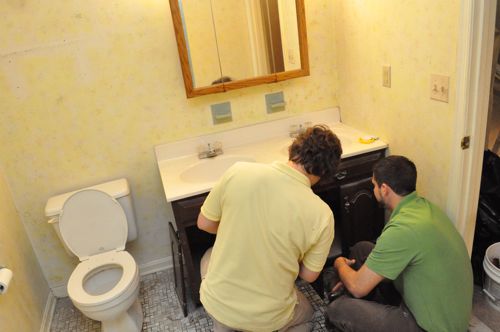
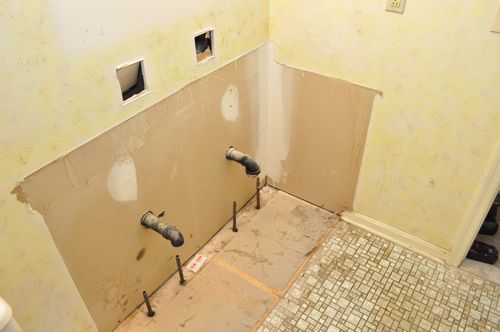
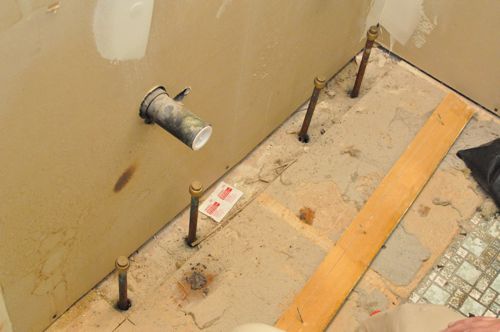
You can see that the water supply lines came up through the floor so these needed to be disconnected before completely removing the vanity. Also, you’ll notice that this house has black ABS pipes instead of copper or PVC pipes.
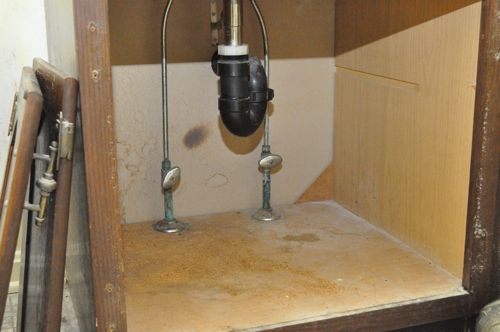
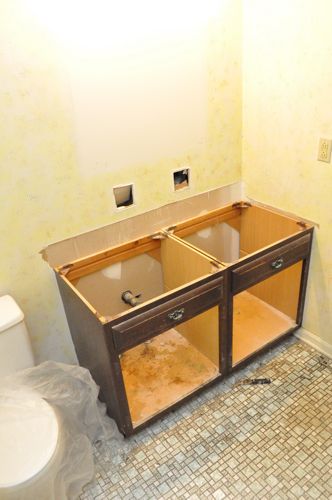
After shutting off the water main, they cut the copper supply lines and pulled the base cabinets.
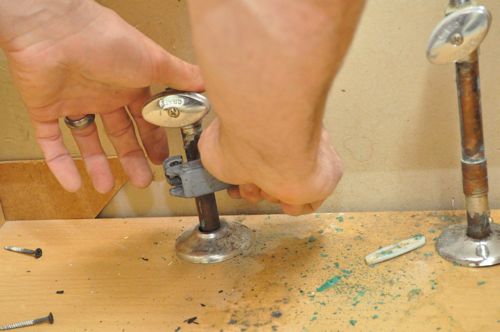
Step 2: Cap and Plug Vanity Plumbing
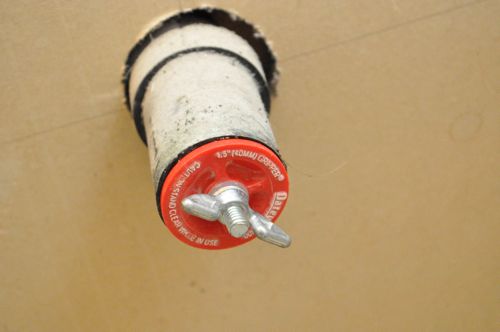
The guys cut the drain lines and inserted temporary plugs. These plugs help prevent gases from traveling up through the pipe, and they keep construction debris out.
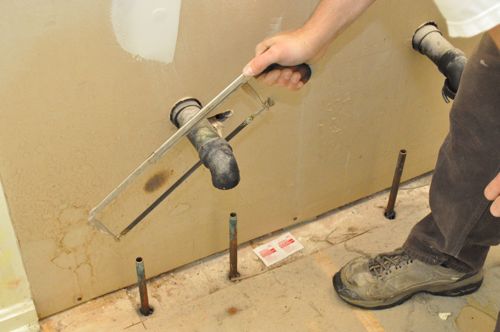
This plug has a wing nut that you can tighten down and mechanically seal the inside of the pipe.
Steve’s crew also used SharkBit end stops to cap the supply lines. SharkBites are great for this application because they eliminate the need to solder a connection, and they can be re-used.
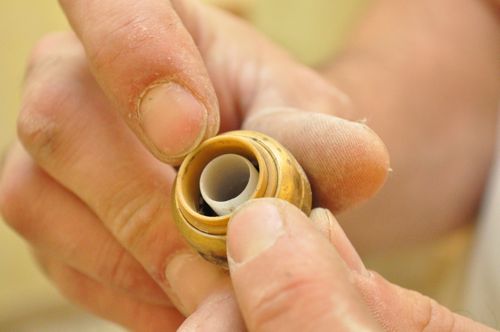
It’s important to clean the copper pipe with a wire brush before making any connections.
Step 3: Remove Drywall and Tile
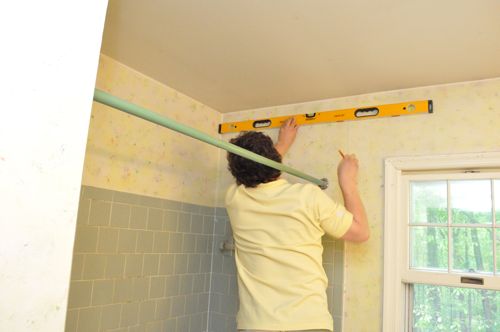
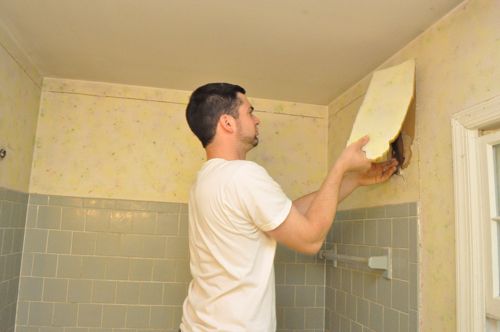
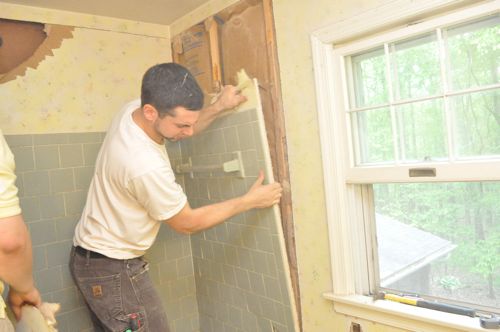
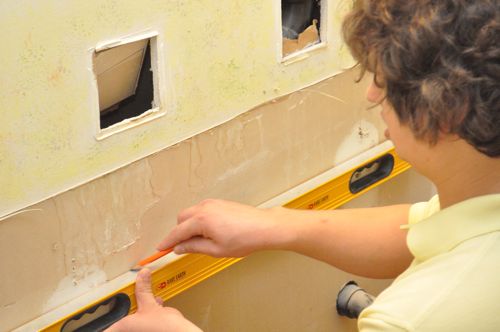
In the shower area, Steve’s crew cut away the existing greenboard since they would be replacing it with cement board, and this made it really easy to get rid of the wall tile. They started by marking a plumb line along the existing tile and about 3″ away from the ceiling.
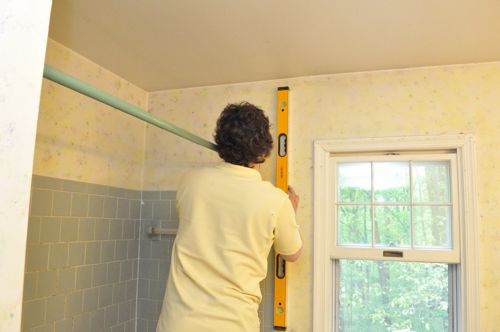
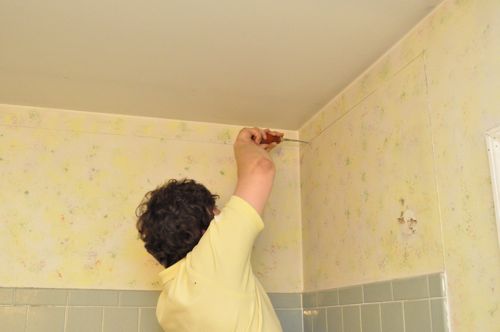
Next, the guys cut the greenboard with a drywall saw.
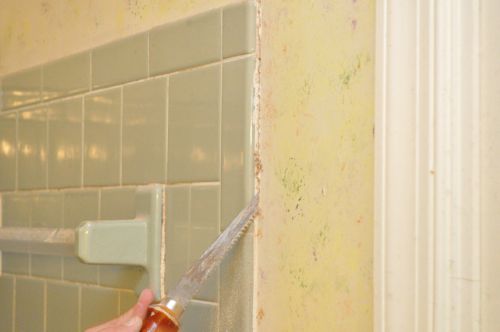
They removed the shower hardware and began to demo the walls in large pieces.
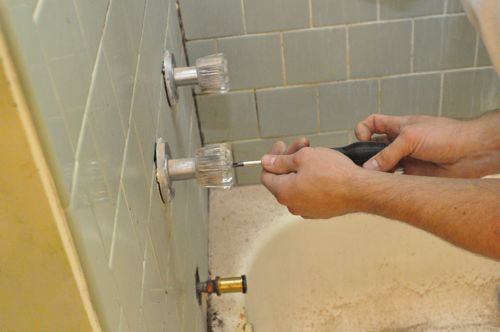
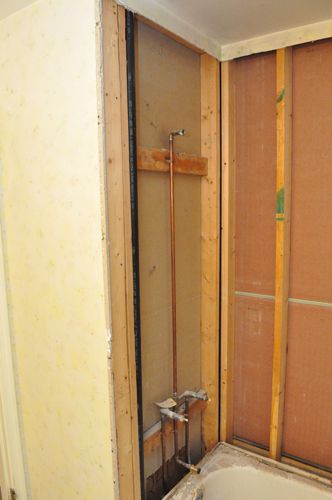
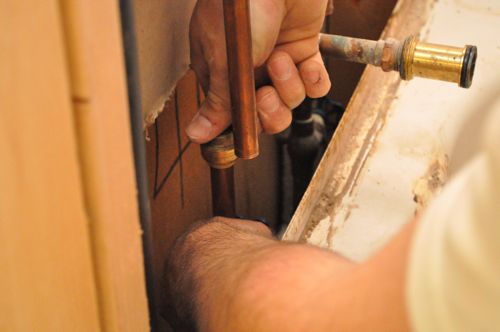
Again, they cut and capped the water lines.
Step 4: Remove Tub
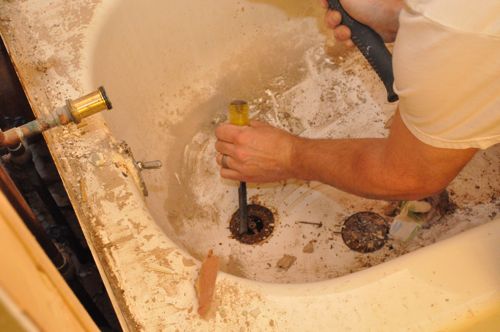
To remove the tub, they first needed to unscrew the drain.
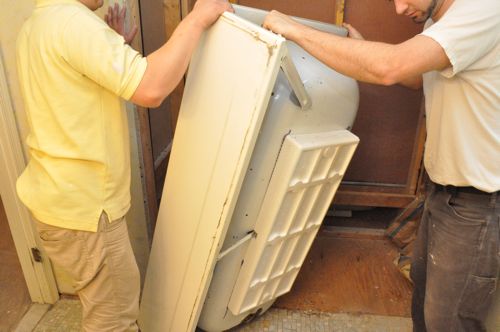
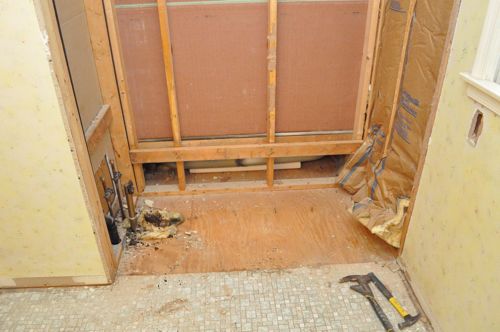
After that, the tub lifted clear.
Step 5: Remove Baseboard and Flooring
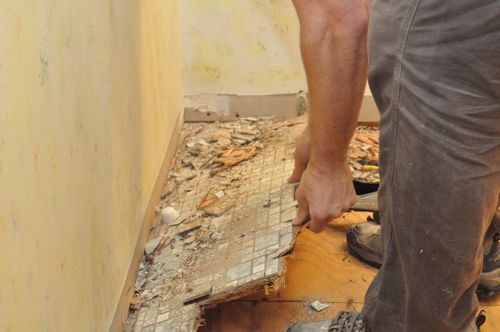
Next, the guys moved on to the flooring. They started by pulling off the shoe molding and baseboard.
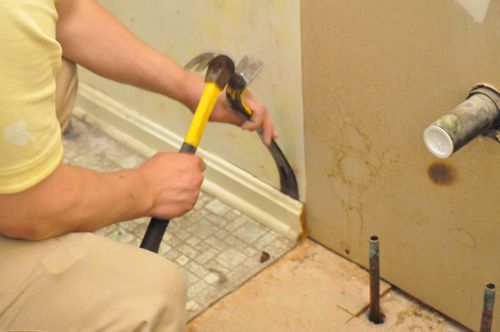
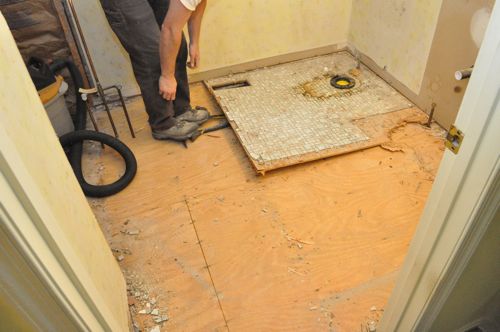
The subfloor was actually two layers of plywood. Steve and his crew target a 1″ subfloor to decrease deflection, and since this floor did not meet that standard, the guys pulled up the first layer of plywood. They’ll replace it with a thicker piece before tiling over it.
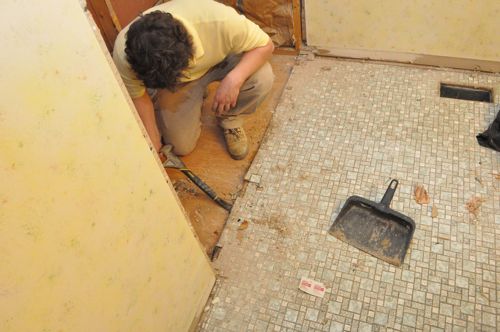
Fortunately, the plywood was only nailed in place (not glued), and it came free without too much trouble.
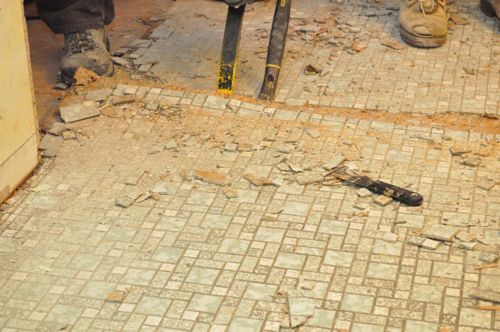

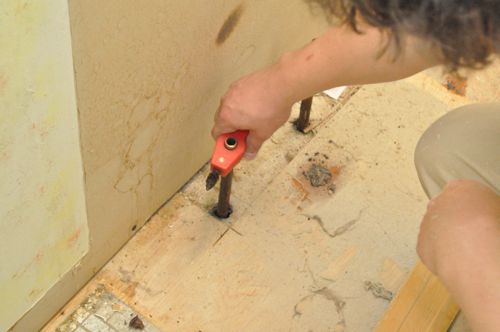
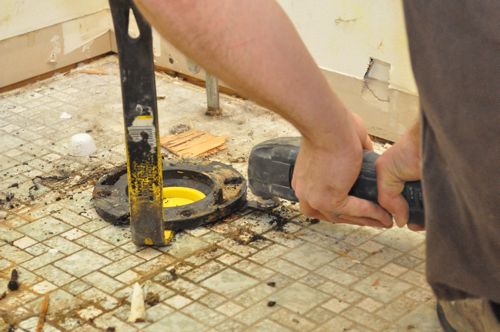
The toilet flange did pose a problem because the screws securing it against the floor were rusted, and the guys couldn’t back them out. Instead, they used a Bosch multi-tool to cut the screws.
Step 6: Cut Hole for Plumbing Access
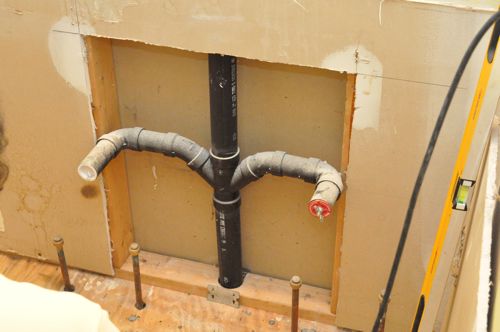
Lastly, Steve’s crew cut the section of drywall behind the vanity to provide access for the plumber, and they saved this piece of drywall to re-hang later.
Step 7: Clean Up
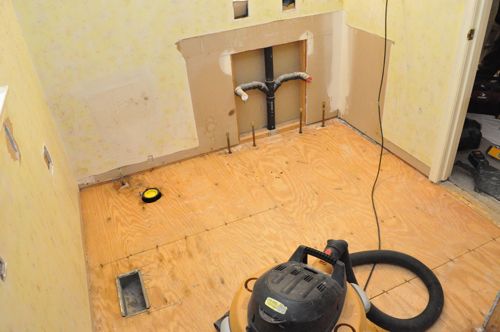
The “bones” of this bathroom are in good shape, and despite the questionable looking tile, there was no water damage. Here’s how everything looked after some cleanup.
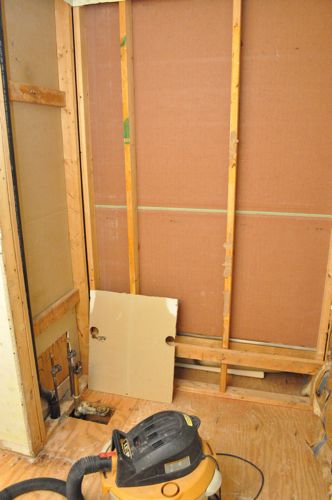
Stay tuned for the next Pro-Follow update in a few days when I share details about the plumbing rough-in.










Now this is a clean looking remodel. Not like ours where we had to gut the entire room. Fun to watch the progress.
Looks a lot easier when you can take everything out in big pieces!
It doesn’t look like they were unscrewing the drain, I don’t usually use a hammer and a chisel to unscrew things!! 🙂
They’re not going to use the cement board under the floor tiles?
I thought cutting the walls and carrying the tile out that way was genius. I’d have been there chipping away and making a big mess. That picture really is showing them unscrewing the drain. It was stuck and so he used a hammer and chisel to get things moving (but you’re right- that’s not the typical way to unscrew something). I asked about cement board, and Steve didn’t want to use it because it wouldn’t reduce the deflection enough. I think the plan is to use 5/8″ ply to give the tile a nice solid base.
It is way easier and faster to take everything out in pieces. I usually use the sawzall though with a short blade and barely tip it into the wall (after making sure there isn’t electrical or plumbing that could be hit). It bugs the crap out of me that every DIY show on TV shows people attacking rooms with huge hammers and bars. What a mess! I just took out my bathtub alcove in 6 pieces. No tiny shards of tile to clean up. Easy.
Wow, this house must have been build with the same plans as our house, it is the exact same floor plan as ours. It’s almost like you’re showing my bathroom. Where is the house?
Our tile is in a grid layout of almost the same color tile though but also goes around the first three feet of the entire room. The floor is the exact same tile and the wall paper is close to the original wallpaper
I ended up replacing the tile shower with a surround this winter because we were having mold issues. My tub didn’t come out as easily as the one above though, it was cast iron and I had to take the sledge to it.
Isn’t it funny when you “see” your house somewhere else?! The same thing happened when Fred and Kim posted their home’s blueprint and floor plan. I can’t reveal the location of the house (homeowner privacy), but I will say it’s in a suburb of Baltimore.
I think it’s always fun when you need to break out a sledge hammer.
This is going to be a great pro-follow, particularly because I see us having to do the same job sooner rather than later. I’m glad to see them put cement board up, and I wonder whether they will also use any Schluter Ditra systems in the shower and on the floor. Curious whether they will install backerboard over the plywood or use something else. Ah, looking forward to the next post, Ethan.
Why didn’t they remove the greenboard all the way to the ceiling? Seems like this would be easiest since you could float to a new corner and not have to worry about the wall being perfectly flush with the old greenboard. Also, if the ceilings are 8 feet, you could use a piece of 8 foot cement board and not have to make any cuts to fit up nicely. What am I missing?
Steve said its mostly preference, and he prefers to do it this way.
I do it this way too. It’s a lot easier to leave a good inside drywall corner in place. Any inconsistencies between the old greenboard and backer can be easily floated with thinset when the tile goes in.
One more thing. Concrete board is usually 32″ x 5′ or 36″ x 5′ and these pieces fit nicely across the width as is.
Thanks.
I cant wait to see the after!
cool. Looking forward to seeing how this turns out. I notice they didn’t do any demo for electrical improvements or venting – are these items already acceptable?
So that’s what it looks like to do a whole project at one time!
We are about 3 months into the shower part on ours. Likely going to be about 9 months total 🙁
Great post. Cannot wait to see the next segment. When you say they are moving the vent closer to the shower, is that an overhead vent not shown in these pictures?
Exactly right.